
Duck in Tucupi Sauce!
The best recipe is the duck in tucupi sauce, an indigenous sour soup that is the most famous dish in Pará in the heart of the Amazon.
DUCKPARÁAMAZON
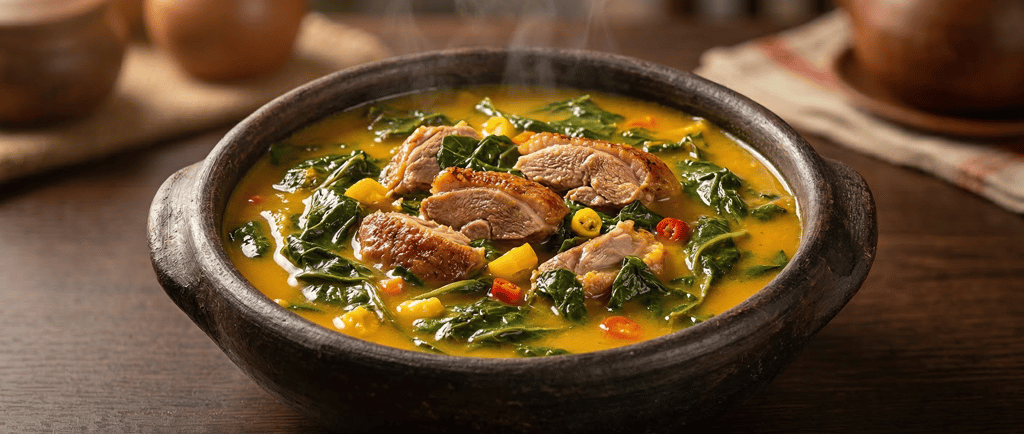

The Amazon’s Culinary Masterpiece
Chef's Summary: Pato no Tucupi is a traditional dish from the Brazilian Amazon featuring roasted duck submerged in an intensely savory, acidic yellow broth extracted from wild manioc root, finished with mouth-numbing jambu leaves. This recipe serves 4 to 6 people and requires slow-roasting the duck to render the fat before braising it in the tucupi to balance the vibrant, earthy flavors.
The Cultural Roots of Pará's Gastronomy
To understand Brazilian gastronomy, you must look to the Amazon. Specifically, the state of Pará. Walking through the Ver-o-Peso market in Belém is an assault on the senses—in the best way possible. The air is thick with the smell of fermented cassava, toasted farofa, and fresh river fish.
Pato no Tucupi is the crown jewel of this region. It is a dish that commands respect, born from indigenous culinary wisdom that pre-dates colonization. Today, culinary professionals like Chef Thiago Castanho have dedicated their careers to elevating these regional flavors. Castanho, whose work at his family's acclaimed restaurant Remanso do Bosque brought Amazonian ingredients to the global fine-dining stage, treats tucupi not just as a broth, but as liquid gold. We owe a debt of gratitude to the local producers and chefs who keep these indigenous techniques alive.
The Key Ingredients: What Makes This Dish Work?
This dish relies on two ingredients that are impossible to replicate with standard Western pantry staples:
Tucupi: This vibrant yellow juice is extracted from pressed wild cassava (manioc) root. In its raw form, it is highly toxic due to hydrocyanic acid. It must be boiled extensively, which neutralizes the toxins and develops a deeply umami, highly acidic, and slightly fermented flavor profile.
Jambu: Also known as the toothache plant, this leafy green is famous for its sensory maximalism. It contains spilanthol, which creates a tingling, effervescent numbness on the palate, perfectly cutting through the rich duck fat.
The Pass: Pato no Tucupi Recipe
(Yields: 4 to 6 servings)
The Ingredients:
1 whole duck (approx. 4-5 lbs), broken down into 8 pieces
2 liters of high-quality, authentic Tucupi
3 cups fresh Jambu leaves (stems removed)
1 head of garlic, minced
4 leaves of chicória do Pará (or substitute cilantro/culantro)
3 fresh Amazonian yellow peppers (pimenta-de-cheiro)
Salt and black pepper to taste
The Method:
Render the Duck: Season the duck pieces generously with salt, pepper, and half the garlic. Roast the duck in a 400°F (200°C) oven for 45 minutes to render out the heavy subcutaneous fat and develop a crisp, Maillard-browned skin.
Prepare the Broth: In a large Dutch oven, bring the tucupi to a rolling boil with the remaining garlic, chicória, and yellow peppers. Lower the heat and simmer for 20 minutes to marry the aromatics.
The Braise: Submerge the roasted duck pieces into the simmering tucupi. Let it gently braise for 40 minutes until the meat is incredibly tender and has absorbed the acidic backbone of the broth.
The Jambu Finish: Blanch the jambu leaves separately in salted water for 2 minutes to soften them, then shock them in ice water to retain their vibrant green color. Fold the jambu into the braise right before service.
Service: Serve immediately alongside steamed white rice and a coarse, toasted manioc flour (farinha d'água) to soak up the broth.
Why Do We Boil the Tucupi? (The Science)
In the kitchen, safety and flavor development go hand in hand. Raw tucupi contains cyanogenic glycosides. By boiling the liquid for several hours, we catalyze a chemical reaction that evaporates the hydrocyanic acid, rendering it completely safe for consumption.
Simultaneously, this sustained heat application concentrates the natural glutamates in the cassava juice. The result is a profound umami bomb that mimics the savory depth of an aged soy sauce or miso, balanced by an aggressive, natural lactic acidity.
What Kitchen Mistakes Should You Avoid?
When executing this dish on the line or at home, precision is key. Avoid these common pitfalls:
Failing to Render the Fat: Duck is a notoriously fatty bird. If you skip the roasting process and drop raw duck directly into the tucupi, the broth will break and become an unappetizing, greasy slick. Rendering the fat first ensures a clean, velvety mouthfeel.
Overcooking the Jambu: Jambu is delicate. If you boil it in the acidic tucupi for too long, it turns to mush and loses its signature effervescent tingle. Always blanch it separately and add it at the very end.
Using Commercial Broth: There is no substitute for real tucupi. Chicken stock with lemon juice will not yield the same complex, fermented depth. Source real tucupi from specialized Brazilian grocers.
Frequently Asked Questions
Can I make Pato no Tucupi ahead of time? Yes. In fact, like many braises, the flavors deepen and harmonize if left to rest in the refrigerator overnight. Simply reheat gently on the stove, adding the blanched jambu right before serving.
What can I use as a substitute if I can't find Jambu? There is no direct flavor substitute for the numbing effect of jambu. However, for texture and bitterness, watercress or Swiss chard can be used to balance the rich duck, though you will lose the signature tingle.
How do I serve the farinha? Do not mix the farinha (manioc flour) directly into the pot. Serve it on the side so guests can sprinkle it over their individual bowls, creating a textural crunch that contrasts with the tender duck and velvety broth.
